













Gate at 08:00
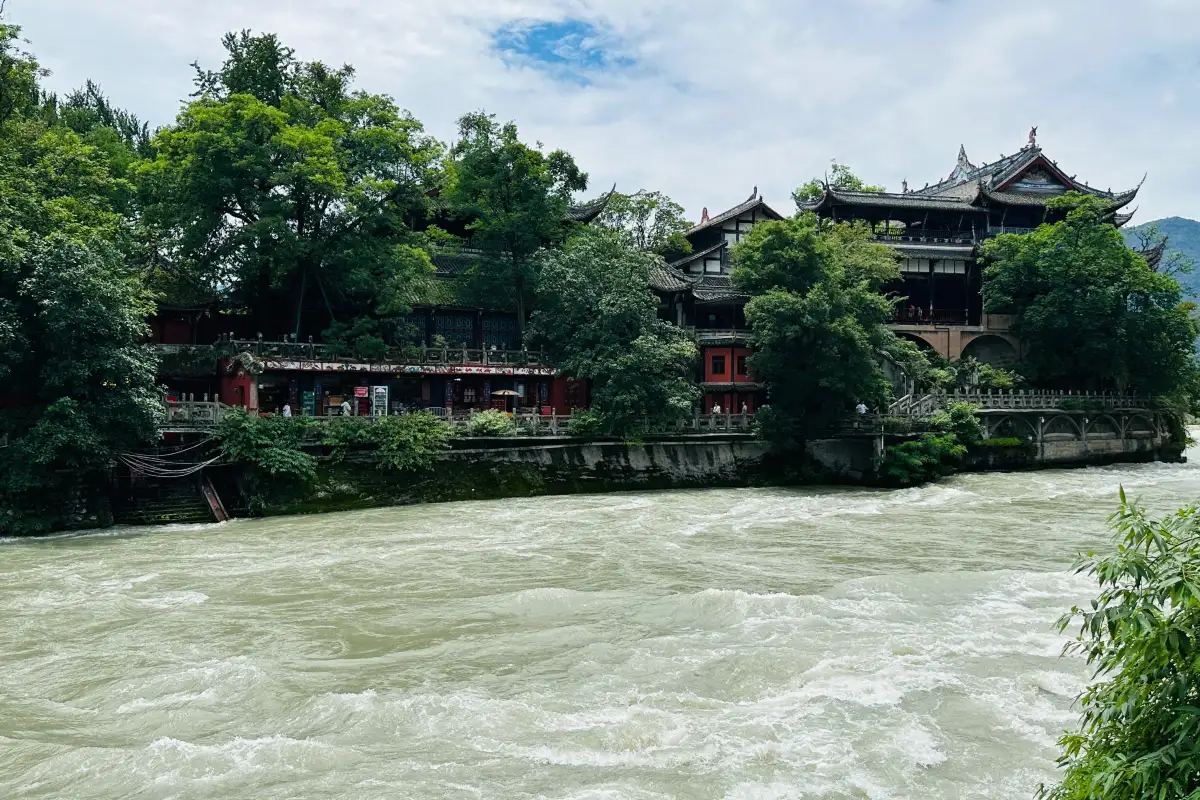
Enter from the Park Road side beside Guanxian Ancient Town, scan the e-ticket and follow the river path into Lidui Park while the light is still soft.
Plan like a pro
Everything you need for a perfect visit to Dujiangyan Scenic Area — timing, transport, the walking route, and insider tips from real travelers.
Timing
The park runs two seasonal clocks — and the river writes its own show across the year.
Getting there
Dujiangyan Scenic Area sits at Park Road, Dujiangyan City (都江堰景区) — about 60 km northwest of downtown Chengdu, at the mouth of the Min River valley. Any taxi or ride-hailing driver will recognize "都江堰景区".
Suggested plan
A tried-and-tested order for first-time visitors — flip it freely, but keep the early-start magic.
Enter from the Park Road side beside Guanxian Ancient Town, scan the e-ticket and follow the river path into Lidui Park while the light is still soft.
Meet the Bottle-Neck channel up close — the cliff Li Bing's workers cut through the mountain — and look down into the green water entering the plain.
The planks sway just above the current. Mid-span, stop and read the whole river at once: inner channel, outer channel, and the fish-shaped dike below.
Walk out to the dividing embankment, the heart of the system, and watch the Min River sort itself into irrigation and floodwater exactly as designed in 256 BC.
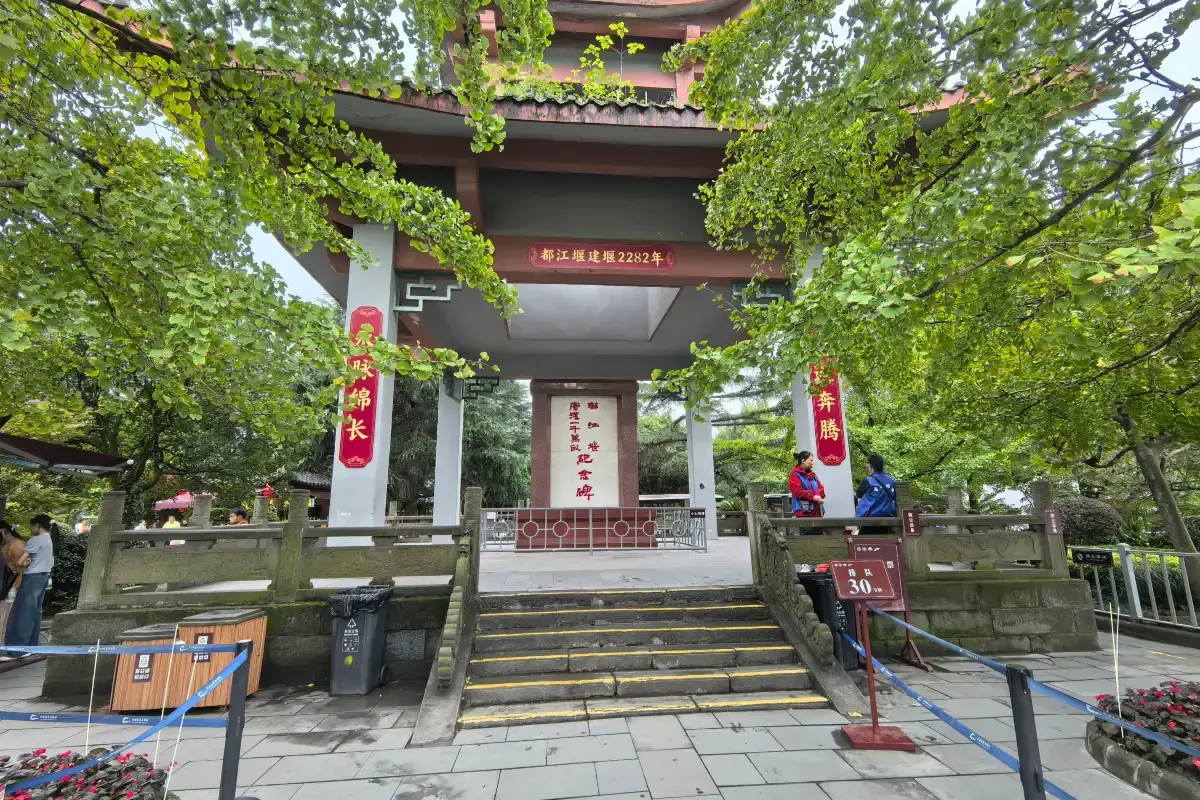
Climb into the Two Kings Temple courtyards on the slope — incense, drum towers, ancient cypresses and rooftop views back over the weir works.
Exit through Guanxian Ancient Town for a teahouse lunch and the snack streets — or continue by bus or taxi to Mount Qingcheng for the second half of the World Heritage pair.
Packing & family tips
Make a day of it
All within reach of the gate — these classics complete a perfect Chengdu-and-beyond day.
The Taoist mountain of the same UNESCO inscription — forested trails, temple compounds and teahouses, 20–30 minutes from the scenic area gate.
The old county town at the doorstep: canalside walkways, snack streets and evening lanterns — the easiest "one more hour" of the trip.
On the way back to the city: the Giant Panda Breeding Base, Wuhou Shrine, Jinli street and the tea-house lanes — a day of water wisdom pairs perfectly with pandas.
FAQ
The recommended sightseeing time is 3–5 hours. The core loop — Lidui Park, Baopingkou, the Anlan Bridge, Yuzui and Erwang Temple — takes 3–4 hours at an easy pace; add Guanxian Ancient Town or a Mount Qingcheng extension and it becomes a full day.
Yes. Signage along the walking route is bilingual, the e-ticket flow on Trip.com is in English, and the ticket hotlines handle inquiries daily. A translation app helps for teahouse menus in the ancient town — or just point at what the locals are having.
Travelers consistently say yes — it is unlike any other monument in China precisely because it is not a ruin: a 2,280-year-old water system still doing its original job. As one reviewer put it, it is "a wonderful experience combining history, culture, and nature", and another called it simply "Обязательно к посещению" — a must-visit.
The park has restrooms and rest points along the whole route, convenience stores and souvenir shops, in-park transport for tired legs and phone service. There is no halal restaurant inside the park, as one traveler notes — bring snacks if you have specific dietary needs, and eat well in the ancient town after.